Connecting administration and construction yard digitally — here’s how it works
Administration and yard operations operate in separate worlds—town hall on the PC, the team outside. Connect both sides on a single platform: assignments, tasks, and feedback in one place.

Contents
Between the town hall and the public works department, there are often only a few streets — but organizationally, they might as well be worlds apart. The administration works at the PC with email and specialized procedures, while public works relies on verbal communication, notes, and personal smartphones. Anyone trying to connect both sides quickly encounters a fundamental problem: over 40% of employees in operational roles have no fixed computer or official email. These non-desk workers rarely access standard administrative channels. The result? Duplicate calls, delayed deployments, and inquiries that can no longer be traced. With Kibi Connect, you bring administration and public works together on one platform — GDPR-compliant and hosted in Germany. Finally, administration and public works — connected.
Why are administration and public works still working separately?
Because their tools don’t match: the town hall runs on email and specialized systems, while public works operates in the field — without a shared digital channel.
Administration and operational teams have entirely different work realities. In the office, everything revolves around inboxes, calendars, and PCs. On the public works site, what matters is mobile access — and for a long time, that meant relying solely on personal smartphones. There’s rarely a bridge between the two worlds: the tour schedule gets printed, disruption reports come in via phone, and feedback often goes unrecorded. According to Destatis, a growing share of employees now work remotely or on-site — and that’s exactly where the information chain breaks down. A shared employee platform closes the gap because it works in the browser and as an app on any device. For the first time, administration and public works share the same information base.
How do deployments and updates reliably reach public works?
Via push notifications and targeted groups — every change lands directly on the team’s smartphone, not on a bulletin board.
The key difference from a notice board is direct, traceable delivery. If winter road maintenance shifts or a road is closed for construction, the administration sends a news post or a message in the chat — and the team receives an instant push notification. Using groups, you can target winter services, green space maintenance, or road maintenance directly, without flooding everyone else. What used to be scattered verbal instructions become documented reports that even the next shift can review. Updates no longer get lost on the hall door.
How do both sides keep track of open tasks?
Through shared tasks with clear statuses — administration sees what’s done, public works sees what’s pending.
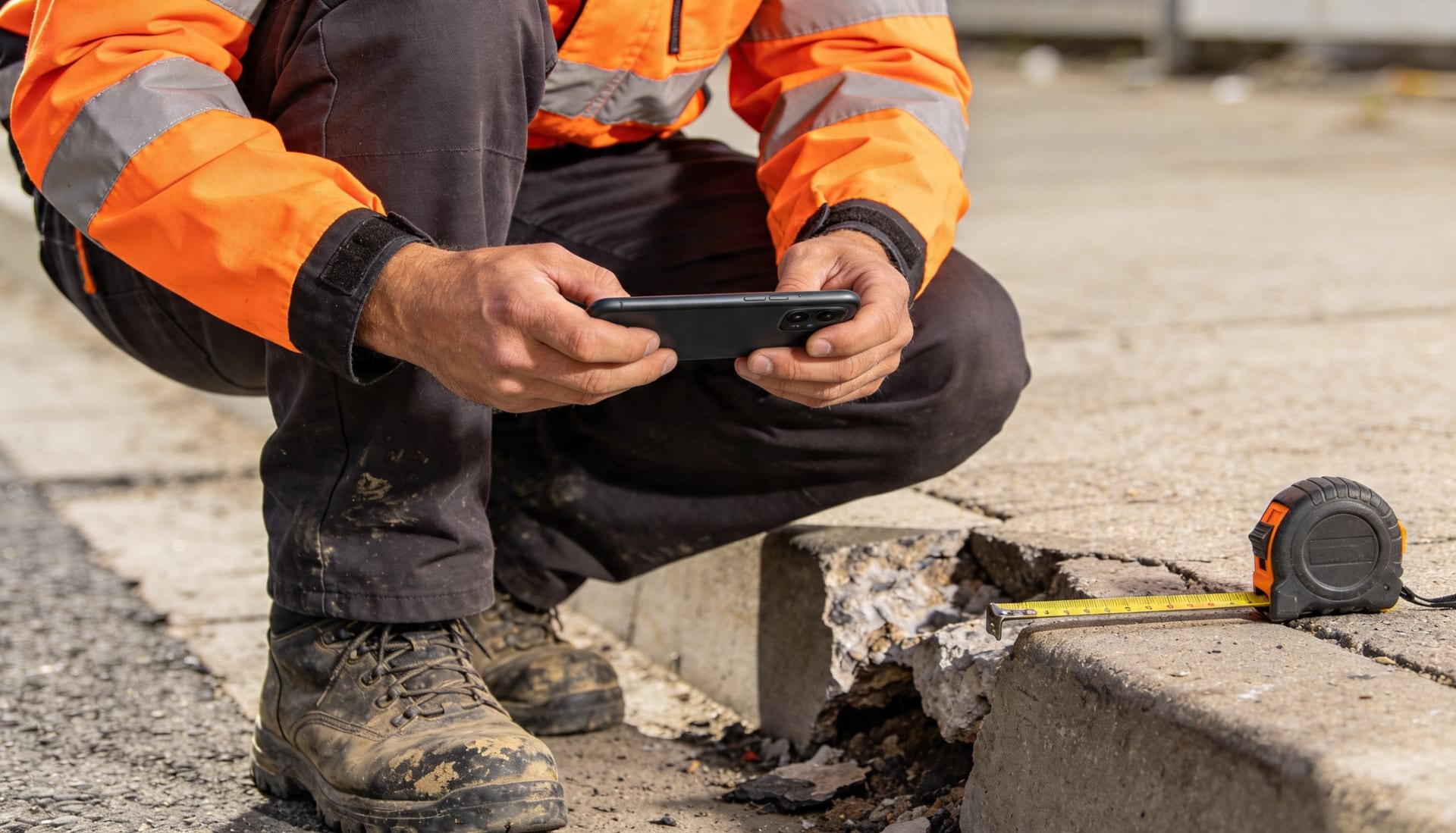
The breakdown usually happens with feedback: the task is assigned, but back at the town hall, no one knows if it’s been completed. With tasks and the calendar, administration and public works plan deployments together. Each task has an assigned person, a deadline, and a status. The team checks off progress on-site via smartphone, while management sees real-time updates — no more follow-up calls needed. Photos of damage or receipts are attached directly to the task. Instead of two separate to-do lists that never align, you get a shared work status.
How is knowledge preserved when experienced staff leave?
Through centralized documentation in the wiki — standard procedures, responsibilities, and equipment knowledge remain accessible, even after staff changes.
On many public works sites, critical knowledge lives in the heads of long-serving employees: where a particular valve is located, how the gritting route runs, who to contact in case of a disruption. When that person retires, the knowledge goes with them. With the wiki and files, you store processes, checklists, and equipment knowledge centrally — searchable and immediately accessible to new hires. This also simplifies onboarding for seasonal workers or trainees. Instead of “Ask your colleague,” there’s a documented baseline that both administration and public works can rely on.
Are data kept secure and GDPR-compliant?
Yes — the platform is operated in Germany in full GDPR compliance, with roles, permissions, and an auditable history — replacing private messengers.
As long as duty rosters, photos, and reports circulate via private WhatsApp groups, municipal data remains outside your control. Kibi Connect is hosted in Germany in full GDPR compliance (Hetzner) — Made in Germany. You control who sees what through roles and areas; every change is traceable. This replaces private messengers with an official channel owned by the municipality. Learn how to cleanly replace WhatsApp in public works in GDPR-compliant communication instead of WhatsApp in municipalities.
Measurable benefits
- Administration and public works on one platform — same information base for both sides
- Deployments and updates delivered instantly via push to the team’s smartphone
- Shared tasks with status, deadline, and feedback — no more follow-up calls
- Central documentation of processes and equipment knowledge in the wiki
- GDPR-compliant hosting in Germany — no more private WhatsApp groups
- Low barrier to entry: web and mobile app, no installation required
Conclusion: Two worlds, one platform
Administration and public works don’t fail due to lack of will, but due to a lack of shared tools. As long as the town hall operates via email and public works relies on field work, the information chain breaks at every handoff. An employee platform like Kibi Connect connects both sides: news, chat, tasks, calendar, and documentation in one place, accessible via push on any smartphone — GDPR-compliant and hosted in Germany. Finally, administration and public works work together instead of side by side.
To learn how to reach all municipal departments, read Communication for all employees in your municipality.
Next step
Set up internal communication professionally
Want to replace WhatsApp chaos and reliably reach all non-desk workers? We show you in a live demo how Kibi Connect is introduced in production, care and retail operations.
Related articles
10/10/2026
Digitalize defect reports from field service — nothing gets lost.
Broken streetlight, fallen sign, illegal dumping: Field service reports get lost between shout-outs and notes. Capture them digitally — with photos, assigned staff, and clear processing status.
10/09/2026
Digitally coordinate winter services in your municipality — routes, operations, and feedback
Winter services are decided at night and early in the morning—when emails and notices fail to reach anyone. This is how you manage routes, deployments, and feedback efficiently on a single mobile platform.
10/14/2026
Ten isolated solutions, one platform — streamlining the municipal tool landscape
Phone trees, emails, bulletin boards, messengers, shared drives, Excel spreadsheets: many municipalities still rely on numerous side channels for communication and organization. Kibi Connect brings it all together on one platform.