Digitize work instructions in production: Apply current standards directly at the workplace
Digital work instructions shorten search times, reduce error rates, and deliver SOPs, checklists, and quality standards directly to the production line. This is how the transition succeeds.

Contents
Digitalizing Work Instructions in Production: Bringing Current Standards Directly to the Workplace
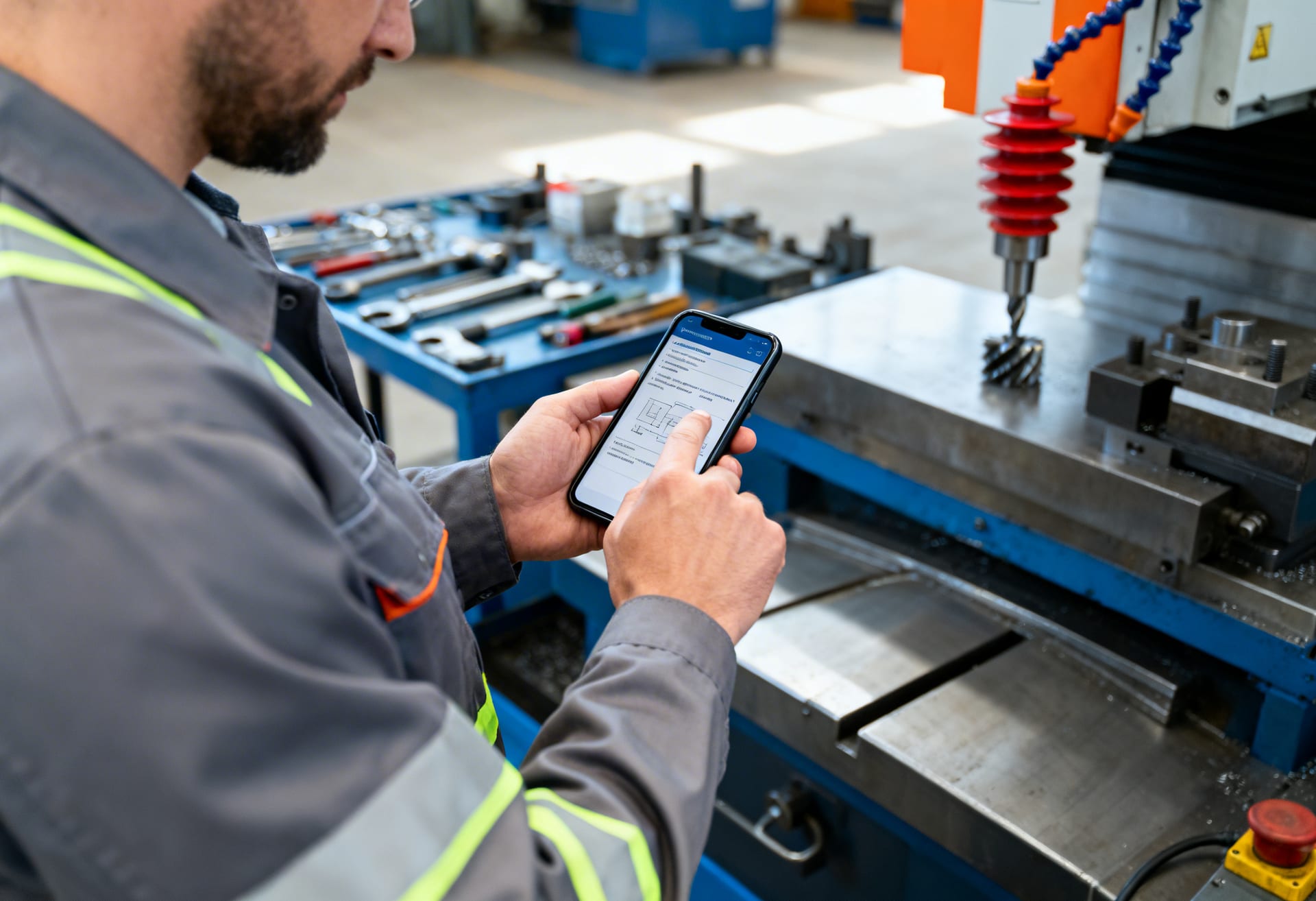
Work instructions are the backbone of any manufacturing operation — but only if the current version is available at the right moment. In many production facilities, SOPs, checklists, and quality guidelines are still stored in paper binders, network drives, or email attachments. Around 80% of production employees work without a PC workstation and have no access to intranets or file servers. That’s exactly why we developed Kibi Connect — a digital hub that delivers work instructions, knowledge, and communication directly to employees’ smartphones. Without media disruptions. Without version chaos.
Why Are Analog Work Instructions a Problem in Production?
“Outdated or inaccessible documents lead to errors, rework, and safety risks.” — Production Manager
Outdated or unfindable documents cause errors, rework, and safety risks. Production staff spend a significant portion of their shifts searching for information — time that could be spent elsewhere in daily operations.
Production managers and quality managers know the symptoms all too well: the current version of an SOP is unclear, changes don’t reach the night shift in time, new employees rely on verbal explanations, and important documents are only available in the office or on a specific PC. Many manufacturing companies report that outdated work instructions regularly lead to quality deviations.
That means: every outdated instruction at the workplace is a potential error.
What Are the Benefits of Digital Work Instructions?
Companies that provide digital work instructions significantly reduce search times and lower error rates. The benefits are clear in four key areas.
- Version control: When instructions are centrally maintained, only one current version exists. Outdated printouts and file copies become a thing of the past.
- Instant access: Employees can find standards directly at their workplace using their smartphones — no detours through the office, no back-and-forth questions, no folder searches.
- Faster onboarding: New employees get up to speed faster when checklists, guides, and processes are structured and available digitally. Digital onboarding processes significantly shorten training time.
- Reduced knowledge silos: Documented processes reduce dependency on individual experienced employees — a crucial factor in times of skilled labor shortages and high turnover.
What Content Should Be Included in Digital Work Instructions?
All documents employees need to work error-free at their station — from SOPs to maintenance checklists. The relevant content varies by production environment:
- Standard Operating Procedures (SOPs) and process instructions
- Machine setup guides with images or videos
- Quality inspections and release processes
- Safety briefings and hazardous substance notices
- Checklists for maintenance, cleaning, or shift start
- Forms, inspection logs, and internal templates
The key isn’t just storing these documents digitally somewhere. They must be available where the work happens — on the line, at the machine, in the warehouse.
What Requirements Must a Solution for Digital Work Instructions Meet?
“Systems that can only be operated by the IT team remain unused.” — Plant Manager
It must function on mobile devices, be easy to maintain, and connect documents with communication. Plant managers and quality managers repeatedly report this: systems that require IT intervention go unused.
Five criteria are essential:
- Mobile availability: The solution must be accessible on-site — 80% of the target group has no PC.
- Clear structure and searchability: Employees must find what they need in seconds.
- Fast, IT-free updates: Changes must be easy to implement without IT projects.
- Self-service content management: Production staff should be able to update content themselves — saving weeks of lead time.
- Unified platform: Documents and communication must not exist in separate systems to avoid new information silos.
How Does Kibi Connect Support Digital Work Instructions?
Kibi Connect consolidates work instructions, communication, and tasks on a single platform — designed specifically for non-desk workers in production. Our solution combines three components that are typically siloed in traditional systems.
- Centralized knowledge in a wiki: Work instructions, standards, and internal notes are stored in a structured knowledge base — searchable, versioned, and accessible directly on smartphones.
- Visible communication of changes: When standards are updated, notifications are sent directly to affected teams, shifts, or departments as targeted push messages to their smartphones. This ensures the current version reaches the workplace — not just a bulletin board.
- Contextual clarification of questions: Questions about an instruction arise where the instruction is located. This saves time that would otherwise be lost searching for the right information.
- Accelerated onboarding: New employees have access to all relevant processes, documents, and contacts from day one.
Learn more about how Kibi Connect supports operational teams in production.
How to Successfully Introduce Digital Work Instructions
Start with a focused pilot project and roll out gradually — don’t try to digitize everything at once. Five best practices from real-world experience:
- Start with critical documents: Begin with the 10–20 most frequently used work instructions — not the entire collection.
- One single source of truth: Maintain each instruction in only one location. Consistently eliminate duplicates in folders and emails.
- Assign content owners: Every document needs a responsible person who approves updates.
- Link documents: Connect work instructions with questions, tasks, and notes — preventing new silos.
- Deliver where work happens: If the app isn’t usable on the production line, digitization remains an office project.
Conclusion: Digital Work Instructions Are a Direct Lever for Quality and Efficiency
“Companies that provide digital work instructions reduce search time, lower error rates, and significantly ease the burden on production teams.” — Quality Manager
Whoever provides work instructions digitally cuts search time, reduces error rates, and noticeably relieves production teams. The benefits are tangible: less time spent searching, faster onboarding, and far fewer quality deviations due to outdated documents.
Above all, digitization creates a more reliable foundation for operational collaboration — especially in companies with shift work, high turnover, or growing compliance requirements. Learn more about the industry solution for production and shift work or test Kibi Connect for free.
Next step
Set up internal communication professionally
Want to replace WhatsApp chaos and reliably reach all non-desk workers? We show you in a live demo how Kibi Connect is introduced in production, care and retail operations.
Related articles
06/29/2026
Provide knowledge and documents centrally: Guides, forms, and operational processes on the smartphone
Provide instructions, forms, and operational processes centrally: How an employee platform brings knowledge and documents to the smartphone of every team.
03/11/2026
Production workforce platform: Reach all shifts—without email chaos
A manufacturing employee platform that reliably delivers shift information, safety alerts, and task assignments to all staff.
10/14/2026
Ten isolated solutions, one platform — streamlining the municipal tool landscape
Phone trees, emails, bulletin boards, messengers, shared drives, Excel spreadsheets: many municipalities still rely on numerous side channels for communication and organization. Kibi Connect brings it all together on one platform.